This is dry skin
A well-moisturised and elastic skin is essential for its function. If the skin is dry, its protective function for the body is impaired.
The skin, the largest organ of the human body, forms the barrier between the environment and the body’s interior. It cushions external influences and protects the body from sunlight, weather conditions such as wind, heat or cold, as well as pollutants and germs.
Normally, the sebaceous and sweat glands continuously produce a mix of oil and water that keeps the skin supple. Dry skin occurs when the sebaceous glands in the skin produce too little oil and when moisture regulation is disturbed by everyday influences. A more accurate description would be “low-moisture and low-fat skin.” The skin loses moisture and lipids (fats) and is no longer able to compensate for this loss. If the skin is out of balance, its barrier function becomes impaired. The skin continues to dry out.
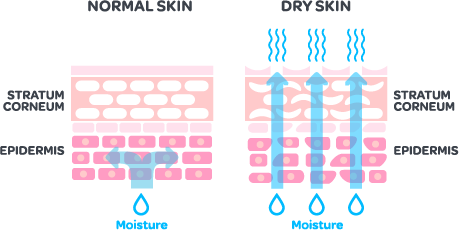
This can be easily illustrated with the brick-and-mortar model::
- Normal skin: Skin cells (the bricks) and layers of a water-lipid mixture (the mortar) keep the skin supple and form a dense, protective skin barrier.
- If the skin is dry, the lipid layers crack. External influences, such as soapy water, also wash lipids out of the skin layers. Damaged skin is similar to an old wall where the mortar between the bricks has crumbled.
- Once the skin barrier is damaged and cracked, it loses even more moisture. A negative spiral can develop.
Dry skin has tiny cracks and feels like parchment. It is rough, slightly cracked and brittle. Dry skin often feels tight and causes itching. The skin also tends to flake and develop cracks.
Depending on the skin type, a distinction is made between dry skin, normal skin and oily skin. However, most people have combination skin with different skin types—for example, oily skin on the face but dry skin on the rest of the body. In addition, skin type varies with the seasons, age, health condition or the person’s hormone levels.
Dry skin is particularly common on the face. But the shins, feet, hands, elbows, and forearms can also be affected. These areas of the skin are often exposed to environmental factors or rub against clothing. In all these areas, the skin has a very thin layer of subcutaneous fat and is supplied with skin oil by only a few sebaceous glands.
30% of the population with dry skin
Therefore, almost everyone experiences – at least temporarily – the problem of dry skin. Dry skin represents a distinct skin type, affecting about 30% of the population. Even two-thirds of all children under 10 years old have already experienced it. Three-quarters of those over 60 need intensive care to compensate for the lack of fat and moisture.